Repiping in Capitol Heights replaces old supply lines in a town that began as a 1904 subdivision on the District's edge. The median home was built in 1967, so many houses still have original pipe. Call the number on this page to be connected with a local plumber in Capitol Heights.
Signs it may be time
- Leaks that keep coming back in different rooms
- Rust-colored water when taps are first opened
- Weak pressure throughout the house
- Gray threaded pipe that weeps at joints
- Corroded valves under sinks and at the water heater
Capitol Heights conditions
Capitol Heights is a small, older town where Northeast and Southeast Washington meet, served by the Capitol Heights Metro station on the Blue Line. The postal area also covers nearby unincorporated neighborhoods. Homes from the early and middle 20th century can have galvanized steel supply pipe; houses from the 1950s and 1960s usually have copper.
Although the town borders DC, it is in Prince George's County, where WSSC Water, not DC Water, provides water and wastewater service and WSSC plumbing rules apply. DC Water's lead programs do not cover these homes. WSSC owns the water service line from the main to the property line, and the homeowner owns the rest. WSSC's What's Your Pipe Type? program identifies service line material, and some customer-side galvanized lines require replacement. If you are right at the DC line, confirm your utility on your bill.
Plumbing permits and inspections come from WSSC Water rather than DPIE, and WSSC requires a plumber holding its license for interior re-piping.
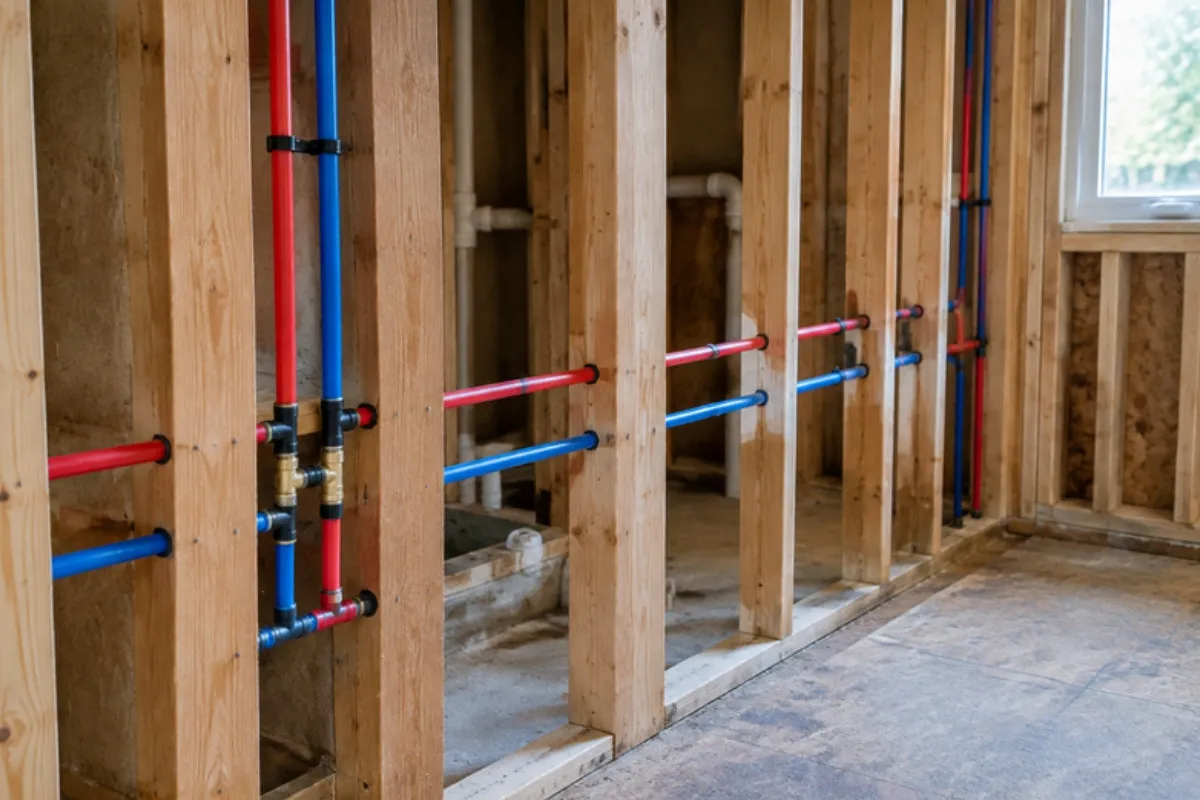
In homes this age, a repipe often follows years of piecemeal repairs. You may find copper in the kitchen, galvanized steel feeding the bathroom and a plastic section where a leak was patched. Each mix of materials adds joints that can fail. Replacing everything from the main shutoff onward gives a single, consistent system, and it is a good time to add accessible shutoff valves at each fixture if the house lacks them.
What changes the cost
- Size of the house and number of fixtures
- Basement or crawlspace access
- PEX or copper
- Plaster or drywall repair
- Replacing the private service line
- The WSSC permit and inspection
What happens when you call
You will be connected with an independent plumber who works in Capitol Heights. Share the age of the home, the type of pipe you can see and where problems have occurred. The plumber will inspect the exposed piping and explain whether repair, partial repipe or full repipe makes sense.
Repiping questions in Capitol Heights
How do I find out who supplies my water?
Should the buried line from the street be replaced at the same time?
Why does copper pipe get pinhole leaks?
Does a repipe need a permit, and who issues it?
More plumbing services in Capitol Heights
Repiping nearby
Helpful guides
Sources
Last updated: