A tankless water heater can work well in a DC rowhouse or condo where space is tight, as long as the gas supply, venting or electrical service can handle it. Existing units mostly need periodic descaling and clean filters to keep running smoothly. Call the number on this page to be connected with a local plumber in Washington, DC.
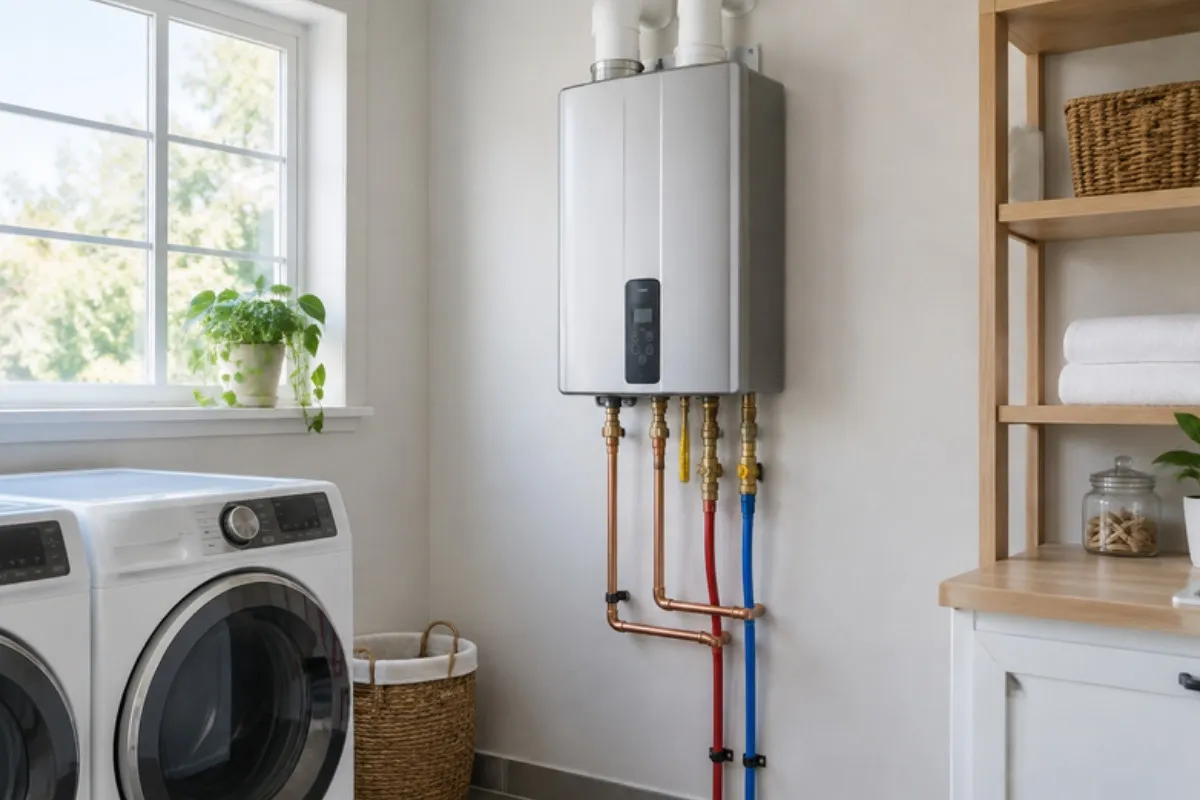
Why people switch
- A wall-hung unit frees up space in a small basement or utility closet
- Hot water keeps coming as long as the unit can keep up with demand
- No large tank keeping a store of water hot while nobody is using it
What a tankless install involves
Gas tankless units draw far more fuel at full fire than a typical tank heater, so the gas line from the meter often has to be upsized. Most models need their own vent, either through an outside wall or the roof, which can be tricky in attached rowhouses with limited exterior walls. Electric whole-house models need substantial electrical capacity that many older DC panels do not have. A plumber should check all three before quoting.
Permits
The DC Department of Buildings issues the Plumbing and Gas Permits for this work, and gas appliance installations fall under that process. Trade permits can only be pulled by a contractor holding a DC license for that trade, so confirm the permit is included in the price.
Scale and DC water
DC Water reports moderately hard water, typically about 70 to 120 ppm (3 to 9 grains per gallon), and its annual water quality report lists an average total hardness near 126 ppm. Tankless heat exchangers have narrow passages, so even moderate minerals can build up over time and set off error codes or reduce flow. Most manufacturers call for periodic flushing with a descaling solution through isolation valves. Homes with a water softener may need it less often.
Common service calls
| Problem | Typical cause |
|---|---|
| Hot water goes cold mid-shower | Flow below the unit's minimum, scale, or gas supply too small |
| Error code on the display | Scale buildup, ignition fault, venting or condensate issue |
| Reduced hot water flow | Clogged inlet filter or scaled heat exchanger |
| Unit will not fire | Gas valve, igniter, power or flame sensor |
Is it right for your home?
Tankless makes the most sense when space is tight and the gas line and vent route are workable. In some older homes the cost of gas and venting upgrades tips the balance back toward a high-efficiency tank or a heat pump unit. Ask the plumber to price both options.
Cost factors
- Gas line upsizing and new venting
- Electrical work for electric models
- Unit capacity and whether it is condensing
- Permit and inspection
Tankless Water Heater questions from Washington homeowners
How often should a tankless water heater be descaled in DC?
Can a DC rowhouse take a tankless water heater?
Do I need a permit for a tankless install?
Why does my tankless heater go cold during a shower?
Related plumbing services in Washington
Helpful guides
Tankless Water Heaters in nearby cities and towns
Arlington County
Alexandria City County
Fairfax County
Fairfax City County
Falls Church City County
Loudoun County
Prince William County
Manassas City County
Montgomery County
Prince George's County
Charles County
Sources
Last updated: