Leak detection is the work of finding water you cannot see, inside walls, under floors, in a basement slab or along the service line in the yard, using pressure tests, acoustic listening and thermal imaging. Pinpointing it first means a small opening instead of a wall of demolition. Call the number on this page to be connected with a local plumber in Washington, DC.
Clues a leak is hiding somewhere
- A water bill that jumps with no change in use
- The meter dial moves while every fixture is off
- Stains on a ceiling below a bathroom, common in stacked rowhouse layouts
- Peeling paint, soft drywall or a musty smell
- A damp spot on a basement floor or wall that is not seepage from outside
- The sound of running water in a quiet house
- Low pressure at several fixtures at once
A quick meter test
Shut off every faucet, appliance and the ice maker, then look at the meter. If the low-flow indicator still turns, water is leaving somewhere. Next, close the main shutoff inside the house. If the meter stops, the leak is inside. If it keeps moving, suspect the service line between the meter and the house.
How plumbers find it
| Method | What it does |
|---|---|
| Pressure and isolation testing | Closes sections of piping to see which one loses pressure |
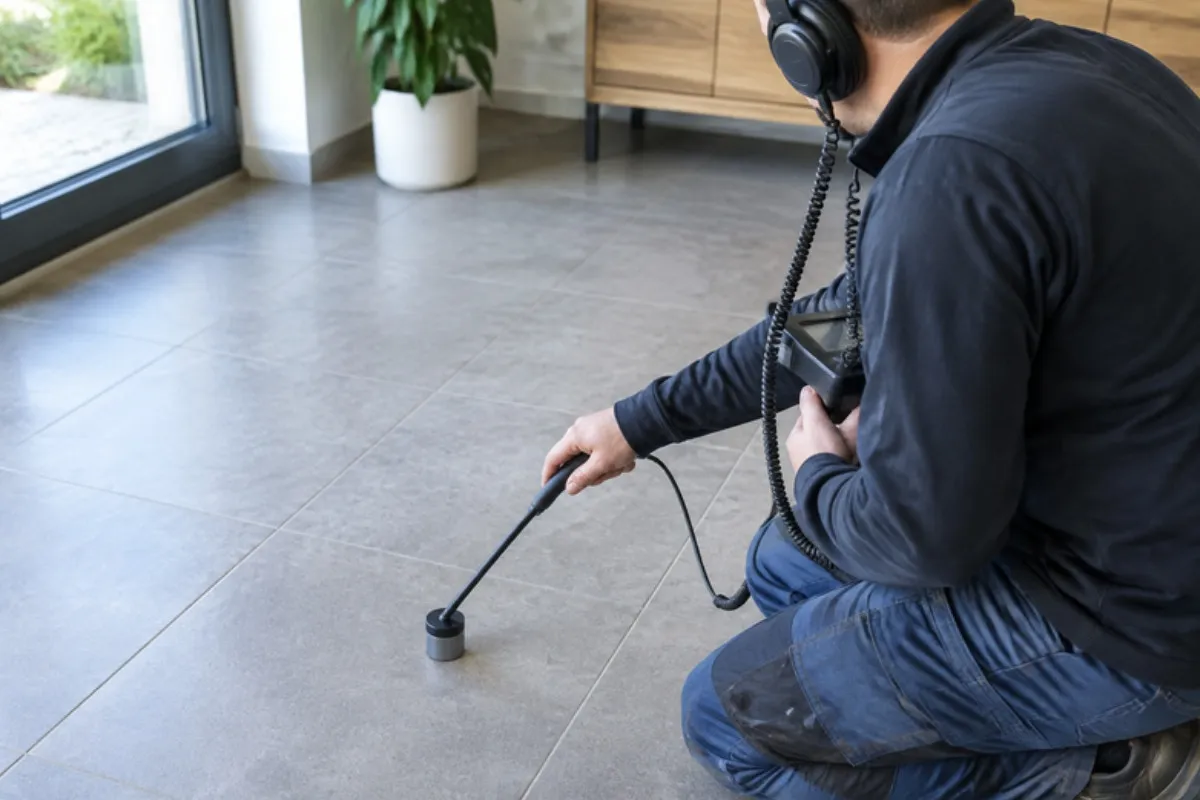
| Acoustic listening | Picks up the sound of escaping water through floors, walls and soil |
| Thermal imaging | Shows the temperature difference a hot water leak leaves behind |
| Moisture meters | Maps how far water has spread in drywall, plaster or wood |
| Line tracing | Locates buried water lines so the yard is dug only where needed |
Where leaks start in older District homes
Washington's median home was built in 1957, and many older houses can still have galvanized supply pipe that rusts from the inside, cast iron drains with failing joints and older service lines. Freezing nights can split pipe in exterior walls, crawlspaces and unheated basements. DC Water also warns that galvanized household pipe can collect lead from a past lead service line and recommends replacing galvanized plumbing fully, so a leak in that kind of pipe is a good moment to think about repiping instead of patching.
Yard leaks and the service line
DC Water replaces the water service pipe in public space, while the portion on private property is the owner's expense. A leak on the street side of your property is something to report to DC Water. Water bubbling up in the street or sidewalk goes to its 24-Hour Command Center at 202-612-3400.
What affects cost
Expect the price to depend on how many tests it takes, the size of the house, whether the leak is on hot or cold piping, and whether repair is quoted separately.
Leak Detection questions from Washington homeowners
How can I tell if a leak is inside or in the yard?
Will finding a leak mean tearing out walls?
Who fixes a leak in the water line near the street?
Why do older DC homes leak inside the walls?
Related plumbing services in Washington
Leak Detection in nearby cities and towns
Arlington County
Alexandria City County
Fairfax County
Fairfax City County
Falls Church City County
Loudoun County
Prince William County
Manassas City County
Montgomery County
Prince George's County
Charles County
Sources
Last updated: