Many District Heights homes are Cape Cods from the 1940s, and a hidden leak there usually shows up as a WSSC Water bill that rises, a meter that moves with nothing on, or a stain that keeps growing. A plumber can track down the leak by testing the system rather than tearing into walls. Call the number on this page to be connected with a local plumber in District Heights.
District Heights homes and leaks
District Heights is a small, fully built-out city near MD Route 4 that started out as farmland. Many of its Cape Cod-style homes went up in the 1940s, when developers built affordable single-family houses with FHA financing, and the city's median home dates to 1968. Older supply and drain piping is common, and homes of that era often have a patchwork of original pipe and later repairs. Joints, valves and transitions between old and new materials are where slow leaks tend to start, often hidden in walls, under floors or in basements. Because the houses are compact, a leak in a kitchen or bathroom wall can show up quickly in the room next door or on the ceiling below.
WSSC Water provides water and sewer service. It owns the service line from the main to the property line, and the homeowner owns the section from the property line into the house. If water is bubbling up in the street, call WSSC at 301-206-4002. WSSC requires service line repairs and interior repiping to be done by a professional holding the proper WSSC license.
Leak detection options compared
| Approach | What it tells you | Limits |
|---|---|---|
| Meter check | Whether water is leaving the system | Doesn't show where |
| Food coloring in toilet tanks | Whether a flapper is leaking | Only covers toilets |
| Section shutoff and pressure test | Which part of the plumbing is leaking | Needs a plumber's equipment |
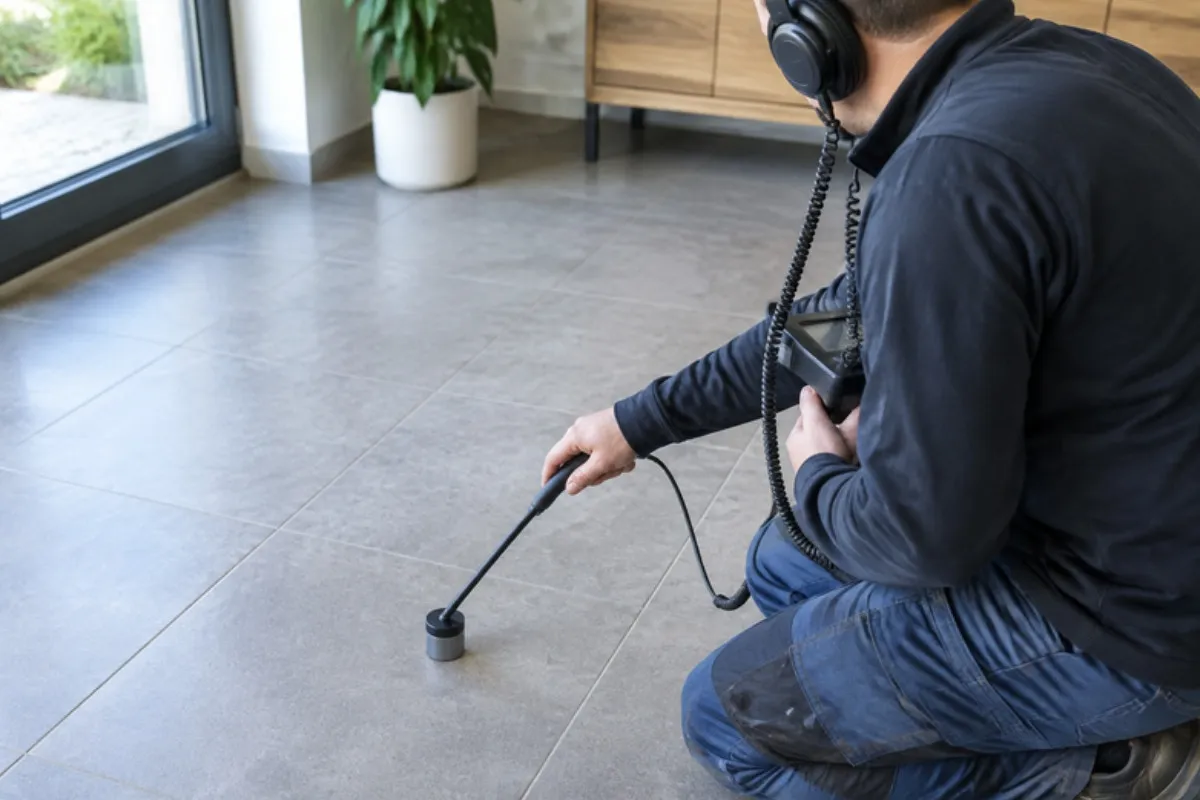
| Acoustic or thermal tools | The leak's exact spot | Best in a plumber's hands |
Signs to look for
- Higher bills without a change in use
- Water stains on ceilings, walls or floors
- Low pressure or rusty water at one fixture
- A musty smell near plumbing
Seasonal notes
Cold weather is the riskiest time for older homes. Pipes along exterior walls and in unheated spaces can freeze and crack, and the leak may not show until they thaw. Check outdoor faucets in spring for leaks inside the wall. Summer storms bring a different problem: water in a basement after a downpour may be runoff rather than a plumbing leak, so notice whether the dampness follows the weather or appears on dry days as well. Plumbing permits, such as for a water heater replacement, come from WSSC Water.
Leak Detection questions in District Heights
Are older homes here more prone to hidden leaks?
How do I use my water meter to check for a hidden leak?
Can a winter freeze cause a leak that only shows up later?
Do I need a permit to fix a leak once it is found?
More plumbing services in District Heights
Leak Detection nearby
Sources
Last updated: