Repiping in Fort Washington replaces the supply lines inside a home when the original copper or steel has reached the end of its life. The area was rural until about 1960, and the median home here was built around 1980, so many houses are now on pipe forty to sixty years old. Call the number on this page to be connected with a local plumber in Fort Washington.
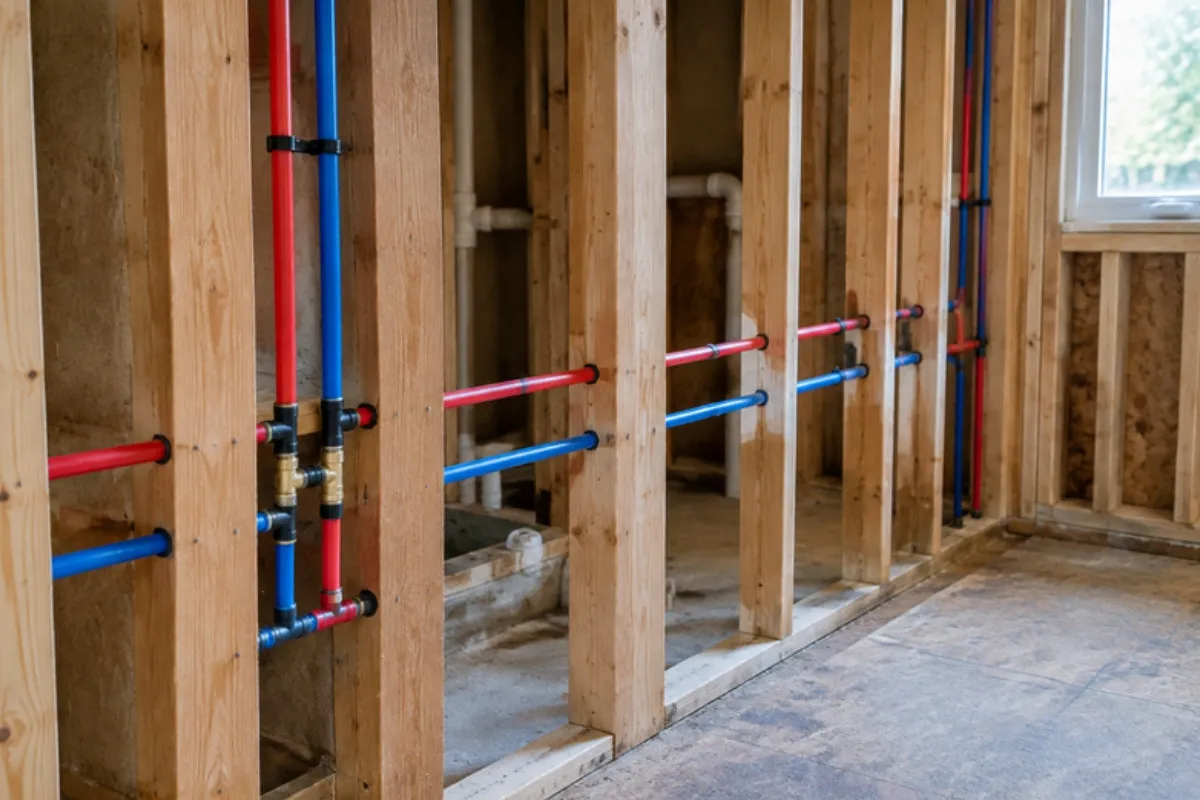
Fort Washington is a Potomac riverfront suburb in southern Prince George's County, with neighborhoods like Tantallon and Fort Washington Forest. Most of its suburban growth came after that point. WSSC Water supplies the area and adds orthophosphate, a corrosion inhibitor that coats the inside of pipes, including those on customer property. That helps slow corrosion, but it cannot rebuild copper that has already thinned.
The decision usually comes down to the pattern. A single pinhole on otherwise clean copper is a repair. Three or four in a few years, spread across different rooms, means the pipe is wearing out everywhere at once, and each new patch only buys time. Polybutylene, a gray plastic used in some homes from the late 1970s into the 1990s, is another common reason to replace the system outright, because its fittings can fail suddenly. Riverfront and wooded lots do not change how the inside of the house is plumbed, but split-levels and lower levels that were finished later can affect how many openings the new lines need.
What to do now
- Stop active leaks. Close the fixture valve or the main shutoff and catch dripping water.
- Write down the history. When and where each leak happened tells the plumber whether the problem is spreading.
- Identify your pipe. Copper is reddish, galvanized is gray and threaded, and gray plastic marked PB is polybutylene.
- Check the water heater area. Corroded fittings there often show the condition of the whole system.
- Know the permit path. In Prince George's County, all plumbing permits come from WSSC Water, not the county, and WSSC requires a plumber holding its license for interior re-piping.
Symptom guide
| What you see | Likely cause |
|---|---|
| Small leaks in different rooms over a few years | Aging copper wearing thin |
| Green crust on joints | Slow seepage at fittings |
| Rust tint at first draw | Galvanized pipe corroding inside |
| Pressure loss throughout the house | Restricted old pipe or a service line issue |
| Sudden leak at a plastic fitting | Polybutylene failure |
Cost factors
- Size and layout, including split-levels and lower levels
- Number of fixtures and outdoor spigots
- Access through an unfinished basement or crawlspace
- Material and fittings
- Drywall repair and finishes
- The WSSC plumbing permit and inspection
Repiping questions in Fort Washington
Why does copper pipe get pinhole leaks?
Does an unfinished basement make repiping easier?
Can a homeowner do their own repipe here?
Should the water heater connections be redone at the same time?
More plumbing services in Fort Washington
Repiping nearby
Helpful guides
Sources
Last updated: