Many Great Falls homes rely on private wells, while some neighborhoods are on Fairfax Water, so the right softener depends on which supply you have. Well water should be tested first; Fairfax Water's plant analyses show public-water hardness of roughly 70 to 185 mg/L. Call the number on this page to be connected with a local plumber in Great Falls.
What happens when you call
The number on this page is a free referral line, not a plumbing company. It connects you with an independent plumber who works in Great Falls. The first question is your water source. If you have a well, the plumber will want a recent water test that covers hardness, iron, manganese and pH, because those decide what equipment belongs in front of or alongside the softener. The Great Falls Citizens Association recommends testing wells every year. If you're on Fairfax Water, a simple hardness test is enough.
Next come the house details: number of occupants and bathrooms, where the well pressure tank or water main sits, and what treatment equipment is already there.
Cost factors
- Well water that needs iron or sediment filtration before the softener
- Larger homes with high peak flow needing bigger valves and tanks
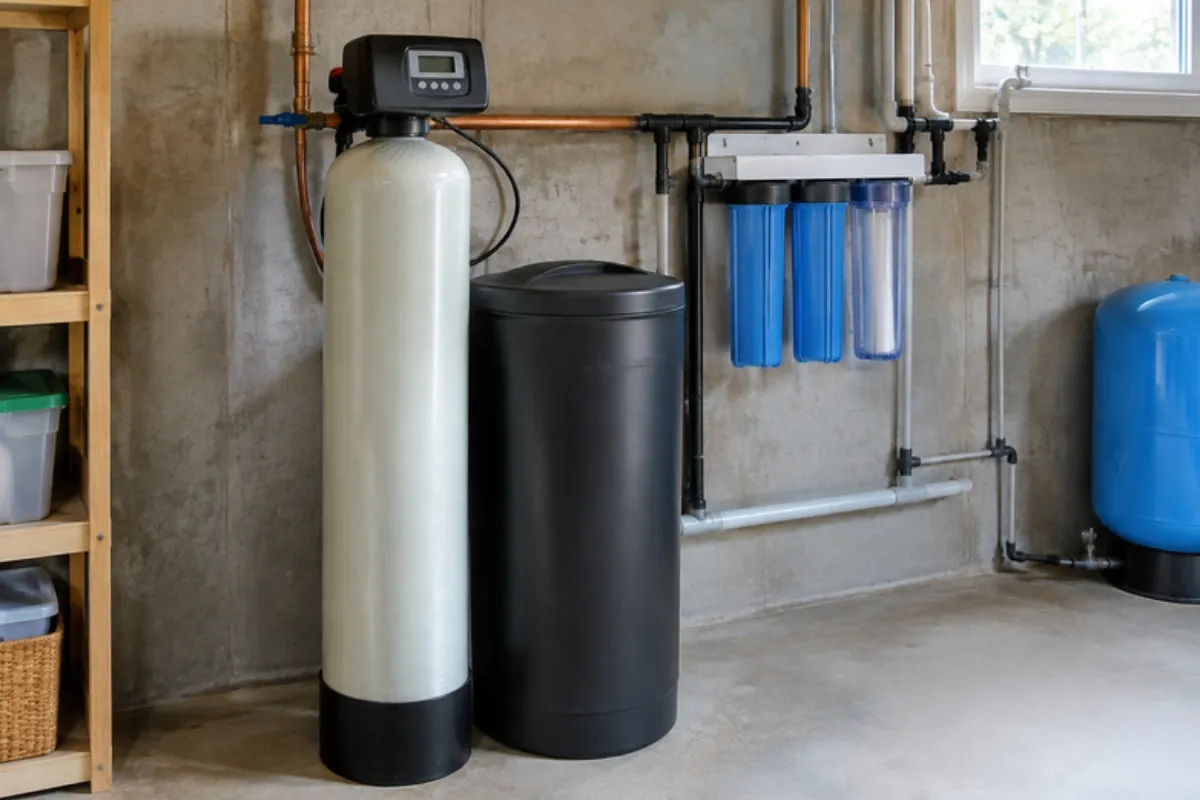
- Space near the pressure tank for several treatment tanks
- Drain access for regeneration and backwash water
- Whether the home's wastewater goes to a private onsite system or county sewer
- Removing outdated treatment equipment
Local conditions in Great Falls
The Great Falls Citizens Association notes that many homes rely on private wells and some neighborhoods are served by Fairfax Water. Many homes are also not on public sewer and use private onsite wastewater systems; Fairfax County Wastewater Management serves the areas that do have sewer. Housing is mostly from the last few decades, with a median build year around 1985.
For Fairfax Water homes, the utility's Potomac plant reports total hardness of about 70 to 185 mg/L and its Occoquan plant about 77 to 147. Well water in the area varies from property to property, which is why a test comes before any equipment decision.
For homes with a private onsite system, the volume of regeneration water matters. A metered, high-efficiency softener that regenerates only when needed sends far less brine to the system than an old timer-based unit. Discuss the discharge with the plumber and with whoever services your onsite system.
Before the plumber arrives
- Find your most recent well test, or schedule one
- Clear access to the pressure tank or water main
- Note existing filters, softeners or UV units
- Know whether your home is on county sewer
Fairfax County Land Development Services is the permit office for Great Falls.
Water Softeners & Filtration questions in Great Falls
We are on a private well. What should be tested before a softener goes in?
Is a softener a good fit for a home that is not on municipal sewer?
Will a softener take iron or other minerals out of well water?
Is an old softener worth repairing?
More plumbing services in Great Falls
Water Softeners & Filtration nearby
Helpful guides
Sources
- Great Falls Citizens Association: water and wells
- Fairfax County: where drinking water comes from
- Fairfax Water: Corbalis plant finished-water analyses
- Fairfax Water: Griffith plant finished-water analyses
- Fairfax County: wastewater management
- Fairfax County Land Development Services: permits in PLUS
- Housing by year built: Great Falls
Last updated: