Most toilet calls in Germantown come down to a tired flapper, a fill valve that no longer shuts off cleanly, a wax ring that has let go at the floor, or a clog lodged in the bowl's trapway. With so much of the housing built in the 1980s, many original toilets and shutoff valves here have reached the age when those parts give out. Call the number on this page to be connected with a local plumber in Germantown.
How the call works
Dialing the number on this page puts you through to an independent plumber who takes jobs in Germantown and along the I-270 corridor. Before anyone heads out, expect a few questions: is the toilet running, leaking, rocking or clogged; has water reached the floor or the ceiling below; is it the only toilet acting up; and is there a basement bathroom. An overflow on an upper floor is more urgent than a slow hiss in a guest bath, and your answers help the plumber bring the right parts.
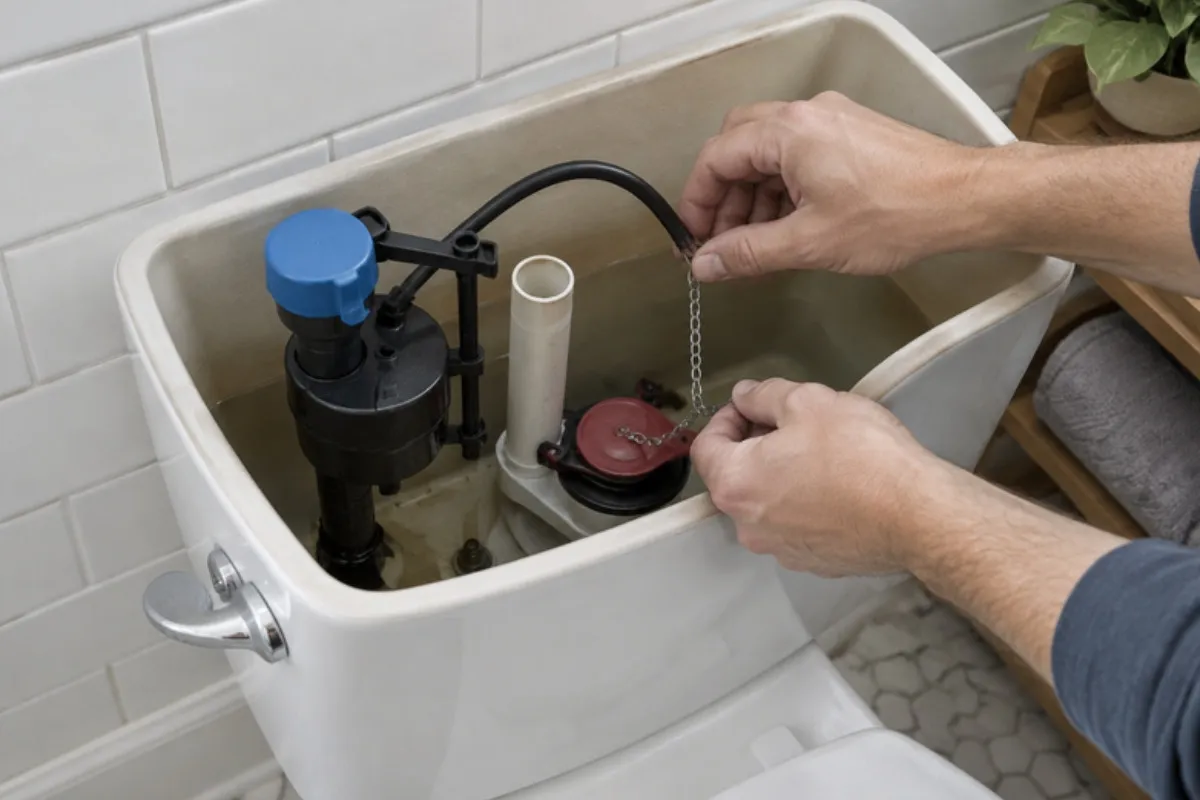
At the house, the plumber usually starts inside the tank, checking the flapper, the flush valve seat, the fill valve and the float height, then looks at the supply line and the angle stop behind the bowl. If the base is wet or the bowl moves, the toilet comes up so the flange and seal can be inspected.
What drives the price
- Tank work versus pulling the toilet: replacing a flapper or fill valve takes far less time than lifting the bowl to reset it on a new seal.
- Flange condition: a cracked or corroded flange, or one sitting below the finished floor, needs a repair ring or replacement.
- Subfloor damage: a seal that leaked for months can soften the floor around the bowl.
- The shutoff valve: original multi-turn stops often refuse to close and get swapped during the visit.
- Clog depth: a toy or a wad of wipes in the trapway clears faster than a blockage farther down the branch drain.
- Timing: nights and weekends usually cost more than a weekday appointment.
Germantown homes and water
Germantown grew quickly once a sewer line reached the area in 1974, and the largest share of homes in the 20874 ZIP code went up during the 1980s; fewer than one in five predate 1980. Plenty of houses still have the toilets and supply valves they were built with, or a first round of replacements that is now aging as well.
WSSC Water supplies the water and carries the sewage away. Its tap water analysis puts average hardness at about 140 mg/L for water from the Potomac plant and about 64 mg/L for water from the Patuxent plant. On the harder supply, scale builds on the flapper seat and inside the fill valve, a common reason a tank starts to trickle. If sewage is surfacing outside or several drains back up together, WSSC Water's emergency line is 301-206-4002. Plumbing permits come from WSSC Water Permit Services rather than the county.
Before the plumber gets there
- Turn the valve behind the toilet clockwise to stop the water; if it won't budge, close the main shutoff
- Lift the tank lid off and set it somewhere it can't crack
- Mop up standing water and note where it seems to start
- Stop flushing a clogged toilet and keep everyone else off it
- Listen for a tub or floor drain gurgling when the toilet is flushed
Toilet Repair questions in Germantown
Does the local water shorten the life of toilet tank parts?
How can I check for a toilet leak I can't hear?
The little valve behind the toilet won't turn or it drips. What now?
How do I know if it's just the toilet or the main drain?
More plumbing services in Germantown
Toilet Repair nearby
Helpful guides
Sources
Last updated: