Nearly every toilet problem traces back to the tank parts (flapper, fill valve, flush valve), the seal between the bowl and the floor, or a blockage in the trap or the drain beyond it. Small leaks add up on the water bill, and a bad floor seal can rot a subfloor or stain the ceiling below. Call the number on this page to be connected with a local plumber in Washington, DC who can repair it or install a replacement.
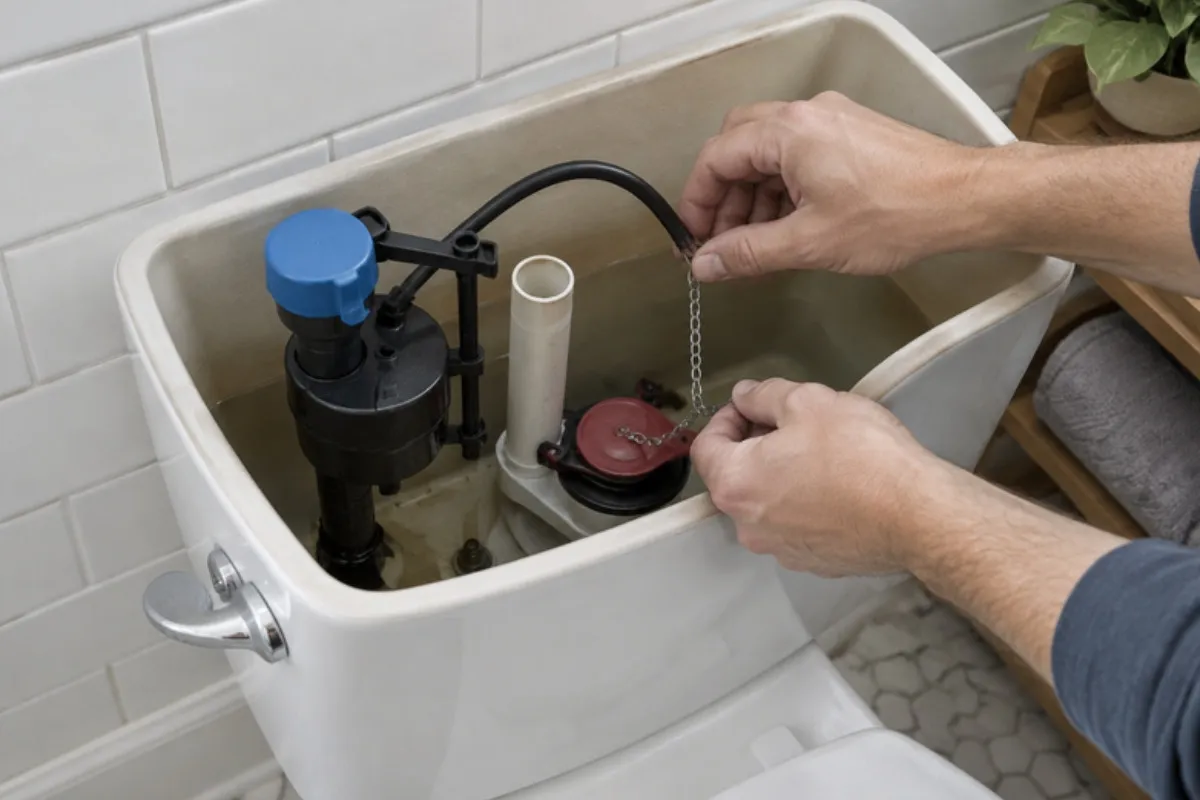
Quick guide to toilet symptoms
| Symptom | Where to look first |
|---|---|
| Hissing or a tank that refills by itself | Flapper not sealing, or a fill valve that will not shut off |
| Handle has to be held down | Chain slack, a waterlogged flapper or a worn flush valve |
| Puddle at the base after flushing | Failed wax or foam seal, or loose floor bolts |
| Water stain on the ceiling below | Floor seal or supply connection leaking into the floor |
| Slow, weak flush | Partial clog, low tank level or deposits in the rim openings |
| Gurgling when other fixtures drain | Venting problem or a blockage in the branch or main drain |
Older bathrooms, older drains
The median home in the District was built in 1957, and neighborhoods like Capitol Hill, Mount Pleasant and Georgetown are full of rowhouses that are much older. Under those toilets you can find cast iron drains, lead or brass closet bends, and flanges that have corroded or been patched more than once. Resetting a toilet on a fresh seal is routine, but a rotted flange or a cracked bend takes extra parts and sometimes opening the floor or the ceiling below. Upstairs bathrooms in rowhouses make a slow leak especially costly, since the water lands on the room underneath.
When the clog is not really in the toilet
A toilet that backs up while the tub or basement drain also acts up usually points to a problem in the main line. In parts of the District served by combined sewers, heavy storms can also slow drainage. A camera inspection shows whether roots, a sag or a broken section of an older lateral is the real cause before anyone starts replacing fixtures.
Mineral deposits
DC Water describes its water as moderately hard. Over years, deposits can build up on tank parts and in the small holes under the rim, which weakens the flush. It is a slow process here rather than a constant fight, and cleaning the rim jets often helps when new tank parts go in.
Fixing versus replacing
New tank parts are a short visit. Replacement usually makes more sense for cracked porcelain, a model with hard-to-find parts, or a bowl that never flushes cleanly. Price depends on the parts, any flange or floor repair, and the toilet you choose.
Toilet Repair questions from Washington homeowners
How can I check for a silent leak?
Why is there a stain on the ceiling under my bathroom?
Does an old house make toilet repair harder?
Should I repair or replace my toilet?
Related plumbing services in Washington
Helpful guides
Toilet Repair in nearby cities and towns
Arlington County
Alexandria City County
Fairfax County
Fairfax City County
Falls Church City County
Loudoun County
Prince William County
Manassas City County
Montgomery County
Prince George's County
Charles County
Sources
Last updated: