Greenbelt toilet repairs usually mean replacing a leaky flapper or fill valve, resetting the bowl on a new wax ring, or clearing a clog from the trapway or drain. The median Greenbelt home was built in 1976, and the historic core dates to the late 1930s, so older flanges and drain lines can complicate a simple job. Call the number on this page to be connected with a local plumber in Greenbelt.
What happens when you call
The number on this page puts you in touch with an independent plumber who works in Greenbelt. Tell them what the toilet is doing, whether water is on the floor or coming through a ceiling, and whether other drains in the house are slow. If you live in Old Greenbelt or a cooperative or condominium building, mention it, since shared walls and stacked bathrooms can change how a leak is tracked down. The plumber will confirm when they can come and discuss what the visit might involve.
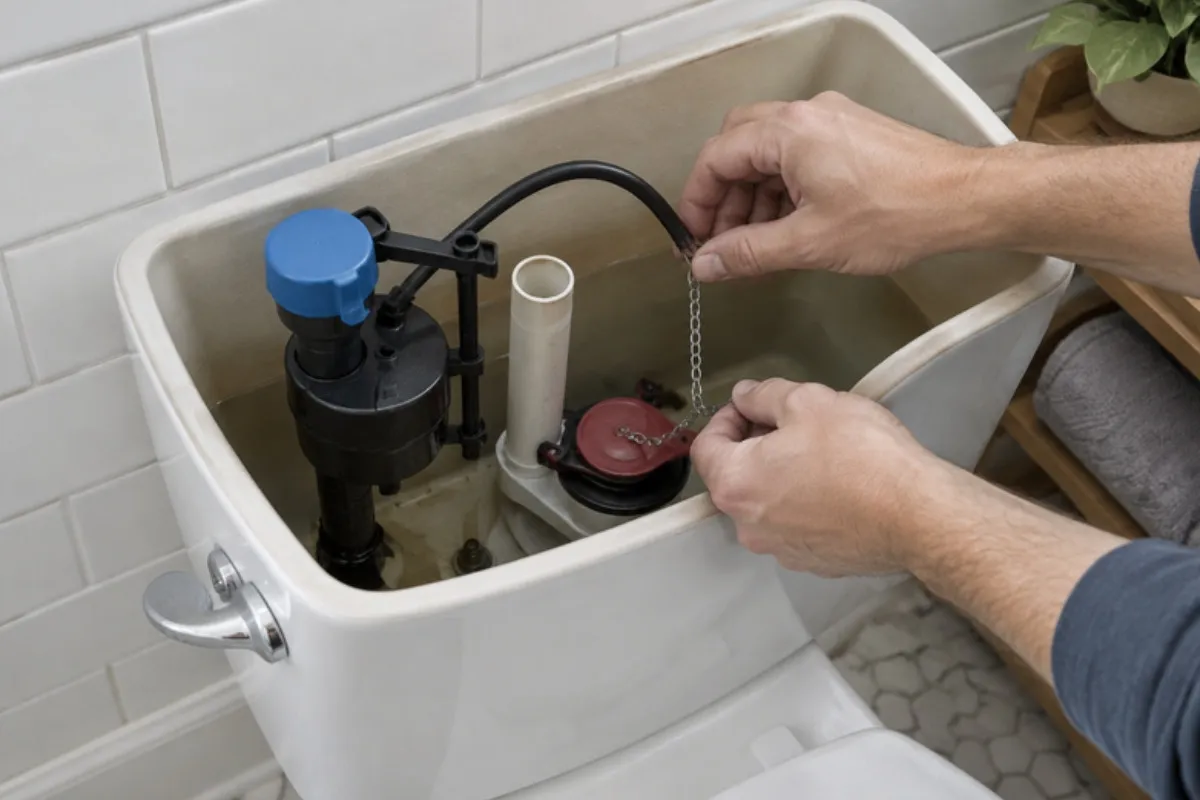
On site, the plumber usually starts with the tank: checking the flapper, the fill valve and the water level, and testing for silent leaks. For a leak at the base, the toilet is lifted so the flange and wax ring can be inspected. For a clog, a closet auger handles most blockages; a backup that involves other fixtures calls for a drain cable or a camera.
What affects the cost
- Parts versus pulling the bowl: tank parts are quick; floor seal work takes longer.
- Flange and floor: damaged flanges or soft subflooring add materials and time.
- Clog location: a blockage in the stack or main line is more involved than one in the bowl.
- Shutoff valve: a seized valve may be replaced first.
- New fixture: replacing the toilet adds the cost of the unit.
Greenbelt plumbing conditions
Greenbelt was built as a New Deal planned community, and Old Greenbelt is a National Historic Landmark District. Homes from the original era, and later additions through the 1970s, can have original drain piping and fixtures replaced many times over. WSSC Water supplies water and sewer service, and the City of Greenbelt directs residents to WSSC's emergency center, 301-206-4002, for water and sewer emergencies.
WSSC's tap water testing shows hardness averaging about 140 mg/L from its Potomac plant and about 64 mg/L from its Patuxent plant, and which plant serves an address varies. On the harder end, minerals can build up on fill valve inlets and flapper seats. WSSC disinfects with chlorine, and treated water slowly hardens rubber flappers, which is one more reason they eventually stop sealing.
WSSC Water issues plumbing permits and inspections. Greenbelt also requires its own City building permit for projects that need a Prince George's County building permit, so a bathroom remodel may involve both. A simple toilet repair usually needs neither.
Checklist before the plumber arrives
- Close the valve behind the toilet if water is still running.
- Find the main shutoff in case that valve won't turn.
- Clear the area around the toilet and put down towels.
- Note whether other sinks or tubs drain slowly.
- Check for stains on the ceiling below.
Toilet Repair questions in Greenbelt
Do minerals in the water wear out toilet parts?
Is a permit needed to swap out an old toilet?
How can I check for a tank leak I can't hear?
Can a plumber put in a taller or easier-to-use toilet?
More plumbing services in Greenbelt
Toilet Repair nearby
Helpful guides
Sources
- City of Greenbelt: water emergencies
- City of Greenbelt: building permits
- WSSC Water tap water analysis (Potomac and Patuxent plants)
- WSSC Water annual water quality report
- Greenbelt housing by year built (city-stats.com, Census ACS)
- Greenbelt, Maryland (Wikipedia)
- Prince George's County DPIE: residential plumbing permits
Last updated: