A plumbing inspection is especially useful in Washington, DC because the housing stock is old, with a median year built of 1957, and older homes can have galvanized supply pipes, cast iron drains, aging sewer laterals and lead service lines. A plumber checks what the house is plumbed with and where trouble is likely to start. Call the number on this page to be connected with a local plumber in Washington, DC who does plumbing inspections.
Why age matters in the District
Census figures put the median year built for Washington, DC housing at 1957. In neighborhoods such as Georgetown, Capitol Hill, Adams Morgan, Dupont Circle and Mount Pleasant, many rowhouses and older homes are far older than that. These houses can still have galvanized supply lines, cast iron drain stacks, older clay or cast iron sewer laterals and lead service lines, often mixed with newer pipe from past renovations.
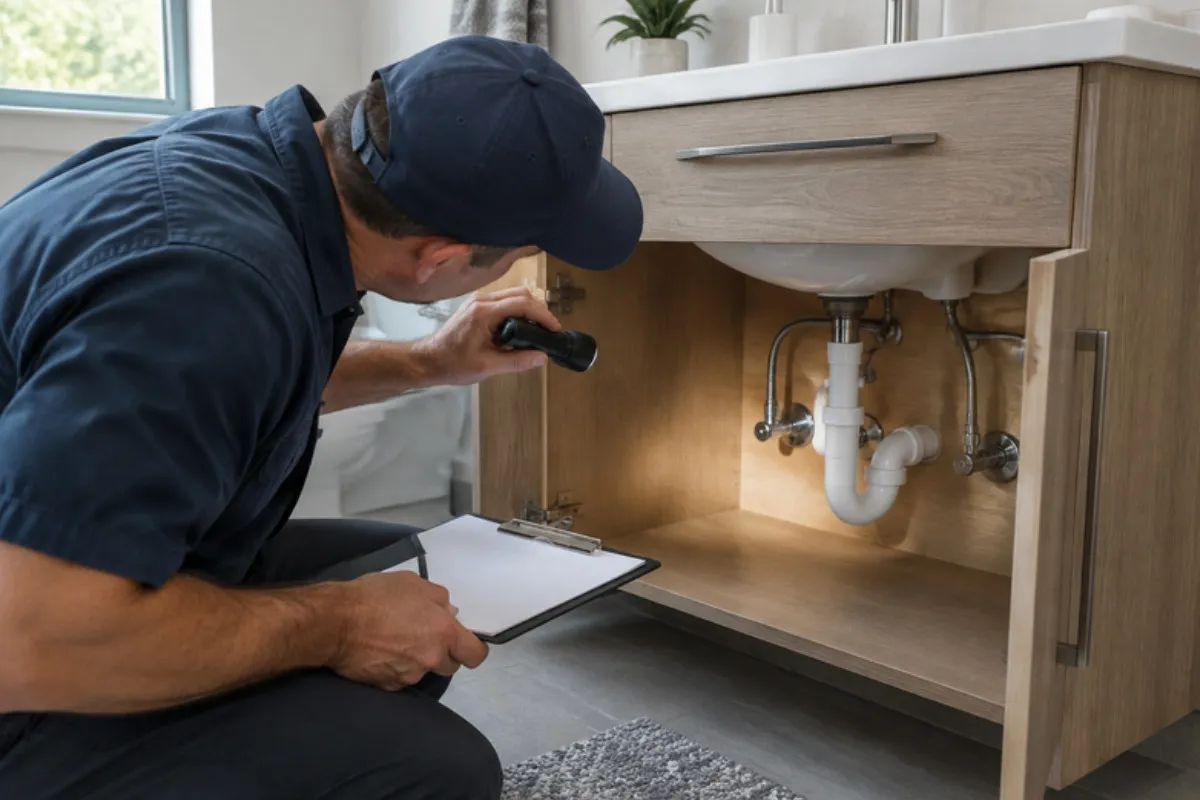
What an inspection typically covers
- Service line: material where the water line enters, and the main shutoff's condition.
- Supply pipes: copper, galvanized, PEX or a mix, plus water pressure and signs of corrosion.
- Drains and vents: cast iron stacks, slow drains, odors and leaks at joints.
- Water heater: age, venting, relief valve and sediment.
- Fixtures: toilets, faucets, shower valves and visible leaks.
- Basement items: floor drains, sump pump, backwater protection and pipes in cold spots.
- Sewer lateral: a camera inspection, recommended for older homes and before buying.
Lead and galvanized pipe
DC Water runs Lead Free DC, which has several lead service line replacement programs and aims to replace all lead and galvanized-iron service lines with copper. Its Service Line Inventory Map shows the recorded pipe material for a property, and DC Water offers free lead testing. DC Water also warns that galvanized pipes inside a home can accumulate lead from a past lead service line, and it recommends fully replacing galvanized plumbing and lead service lines. Check with DC Water for current program details.
Ownership matters here too. DC Water replaces the service pipe in public space, while the private-property portion is at the owner's expense, and DC Water will coordinate that work.
Combined sewer areas
About one-third of the District sits on a combined sewer system developed before 1900, and heavy summer storms can push water back into basements. An inspection can note whether floor drains and fixtures below street level are protected.
What affects the cost
Price depends on the size of the home, how many units it has, whether a sewer camera is included, and how much of the piping is accessible.
Plumbing Inspection questions from Washington homeowners
How old are homes in Washington, DC?
How do I know if my home has a lead service line?
Who pays to replace the private side of a service line?
Should I add a sewer camera inspection?
Related plumbing services in Washington
Helpful guides
Plumbing Inspection in nearby cities and towns
Arlington County
Alexandria City County
Fairfax County
Fairfax City County
Falls Church City County
Loudoun County
Prince William County
Manassas City County
Montgomery County
Prince George's County
Charles County
Sources
- Washington, DC housing by year built (city-stats.com, Census ACS)
- DC Water: Lead FAQs (public-space vs private-property service pipe replacement)
- DC Water: Lead Free DC (lead service line replacement programs, inventory map, lead testing)
- DC Water: Galvanized plumbing FAQ
- DC Water: Combined sewer system (sewer emergencies 202-612-3400)
Last updated: