A slab leak is a break in a water pipe that runs in or under a concrete floor, which in the District usually means a basement slab, a ground-level rowhouse floor or a newer addition. Fixing it starts with pinpointing the leak, then opening the concrete at that spot or running a new line around it. Call the number on this page to be connected with a local plumber in Washington, DC.
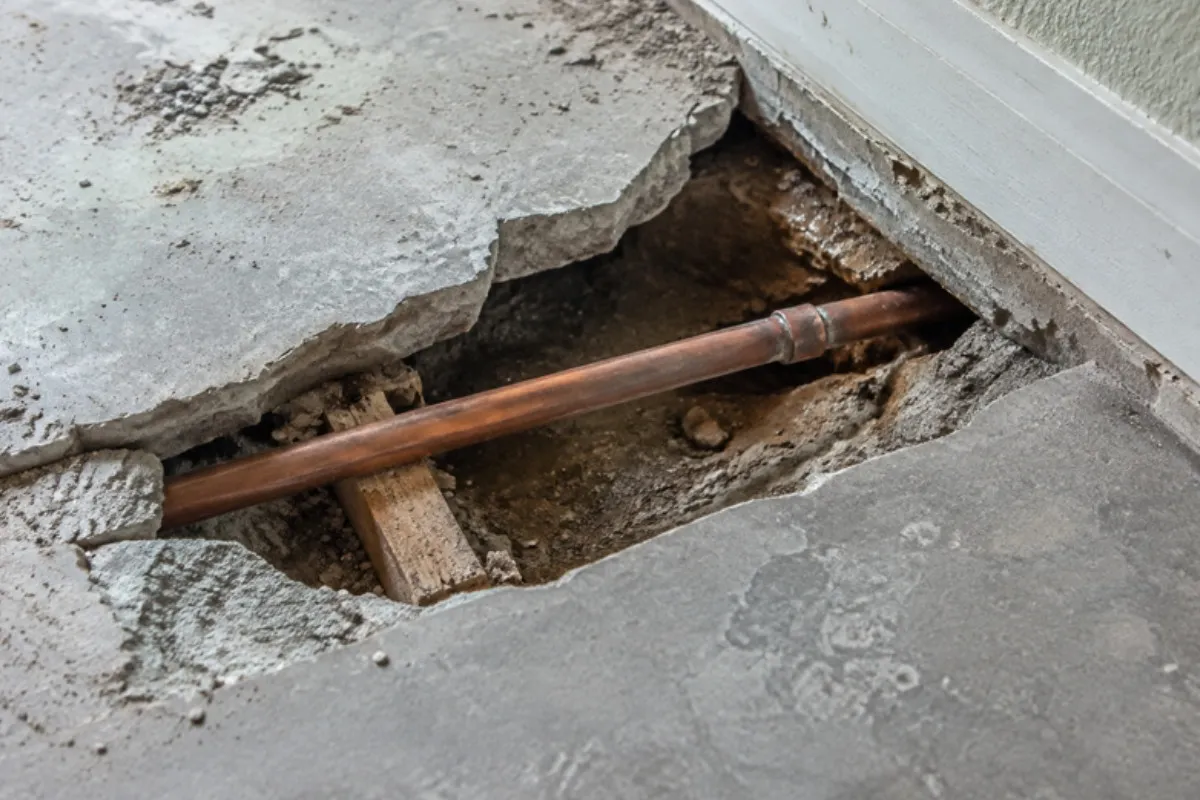
Where buried leaks hide in District homes
Many DC houses and rowhouses have basements, and the water service often enters below grade and travels under or along the basement floor before rising to the first fixtures. Kitchens and baths added at basement level, English basement apartments and rear additions on slabs all put pipe under concrete. With a median year built of 1957, much of the city's housing has older copper or galvanized steel in those buried runs, and either can wear through with age.
Signs that point to a slab leak
- A damp or darkened patch on a basement floor that returns after you dry it
- Warm spots on the floor above a hot water line
- The water heater cycling when nobody is using hot water
- Hissing or trickling with every faucet closed
- A DC Water bill that climbs while household use stays the same
A quick meter test
Close every faucet and stop appliances that use water. Read the meter, wait an hour without running anything, then read it again. A change means water is going somewhere. If you can close the main shutoff and the movement stops, the leak is inside the house. If it continues, look at the service line between the meter and the house instead, which is covered on the water line repair page.
How a plumber finds it
The usual steps are isolating hot and cold lines and pressure-testing each one, then using acoustic listening gear on the floor to hear where water escapes. Thermal imaging helps trace hot lines. The tighter the locate, the less concrete has to be cut.
Repair choices
| Option | Best for | What to expect |
|---|---|---|
| Open the floor and repair | A single failure in otherwise healthy pipe | A small section of concrete is cut, the pipe is fixed and the floor is patched |
| Reroute the line | Buried pipe that is old or has leaked before | New pipe runs along walls or ceilings and the buried run is capped |
| Repipe | Aging galvanized or repeated leaks in several places | Larger project that replaces the weak pipe throughout |
Cost factors
Locating time, how much concrete and finished flooring sit over the leak, the repair route, and any drying or finish work afterward drive the price. Adding or replacing piping can require a DC Department of Buildings plumbing permit, which only a contractor holding a DC plumbing license can pull, so ask who handles it.
Slab Leak Repair questions from Washington homeowners
Can a slab leak happen in a house with a basement?
Will the whole floor need to be torn up?
How do I know whether the leak is inside or outside the house?
Does homeowners insurance cover slab leaks?
Related plumbing services in Washington
Helpful guides
Slab Leak Repair in nearby cities and towns
Arlington County
Alexandria City County
Fairfax County
Fairfax City County
Falls Church City County
Loudoun County
Prince William County
Manassas City County
Montgomery County
Prince George's County
Charles County
Sources
Last updated: