A dripping showerhead, a handle that spins without control, or water that suddenly goes scalding or cold almost always points to the valve cartridge or its pressure-balancing parts. Many repairs are done from the front through the trim, while older valves sometimes need wall access to replace. Call the number on this page to be connected with a local plumber in Washington, DC who can diagnose and fix the valve.
Signs the valve is the problem
- The showerhead or tub spout keeps dripping after the handle is off.
- Temperature jumps when a toilet flushes or a dishwasher starts.
- The handle is stiff, loose or turns past where it used to stop.
- You can only get lukewarm water no matter where the handle sits.
- Flow is weak at the shower but fine at the bathroom sink.
Repair from the front or open the wall
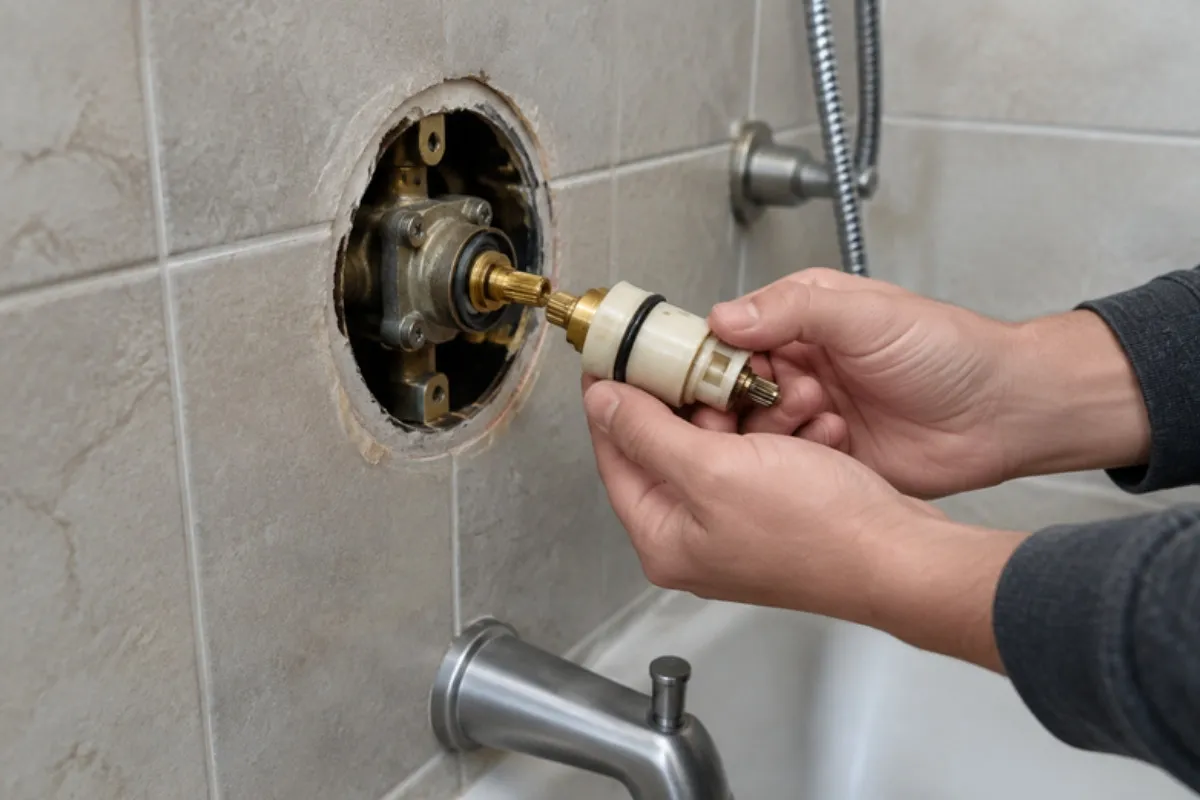
Most modern single-handle valves accept a replacement cartridge after the trim plate is removed. A plumber shuts off the water, pulls the old cartridge, cleans the valve body and installs the matching part. Older two- and three-handle valves found in many District bathrooms use stems and seats, and those can often be rebuilt too. When the valve body is cracked, parts are no longer made, or you want anti-scald protection the old valve cannot provide, the valve itself is replaced, which usually means opening the wall or working from a closet or room behind it.
Old houses and hidden pipes
With a median year built of 1957, many homes in the District have valves and piping well past their intended life. Galvanized supply pipes can narrow inside and choke flow at the shower before other fixtures show it. If a valve replacement exposes corroded pipe in the wall, it is often the right time to replace those sections with new material. DC Water recommends fully replacing galvanized household plumbing because it can hold lead from past lead service lines.
Mineral deposits
The District's moderately hard water can, over time, leave deposits in cartridges and showerhead nozzles. Soaking a showerhead clears the nozzles; a cartridge that has stiffened is usually replaced rather than cleaned.
Permits and cost
The DC Department of Buildings issues plumbing permits for new fixtures, and only a contractor holding a DC license for that trade can apply. A plumber can tell you whether a full valve replacement in your home needs one. Cost depends on the valve brand and type, whether a simple cartridge swap fixes it, how much wall or tile has to be opened, and any pipe repairs found behind the wall.
Shower Valve Repair questions from Washington homeowners
Why does my shower suddenly go hot or cold?
Can a shower valve be replaced without breaking tile?
Why is my shower weak when the sink is fine?
Does a shower valve replacement need a permit in DC?
Related plumbing services in Washington
Helpful guides
Shower Valve Repair in nearby cities and towns
Arlington County
Alexandria City County
Fairfax County
Fairfax City County
Falls Church City County
Loudoun County
Prince William County
Manassas City County
Montgomery County
Prince George's County
Charles County
Sources
Last updated: